European Artists Who Painted a Land They Never Saw
How books, objects, museum collections, and imagination shaped Europe’s vision of India
The history of European art is often written through voyages, discoveries, and encounters. Artists travelled to distant lands, observed unfamiliar cultures, and returned with sketches, paintings, and stories that transformed Western visual culture. Yet some of the most influential images of India were created not by travellers but by artists who never visited the subcontinent.
Instead, they relied upon books, museum collections, travellers’ accounts, imported artefacts, photographs, and their own imagination. Their works reveal how India was constructed within the European imagination long before direct experience became common.
For centuries, India occupied a unique place in the Western mind. It appeared simultaneously as a historical reality and a mythical realm—a land of emperors and ascetics, palaces and temples, elephants and maharajas, immense wealth and ancient wisdom. Long before affordable travel, photography, cinema, or the internet transformed access to distant cultures, India was already being imagined, illustrated, and interpreted across Europe.
The resulting body of work is both fascinating and complex. It tells us as much about Europe’s dreams, anxieties, and aspirations as it does about India itself.
Rembrandt and the Mughal Connection
Perhaps the most surprising example is Rembrandt Van Rijn (1606–1669).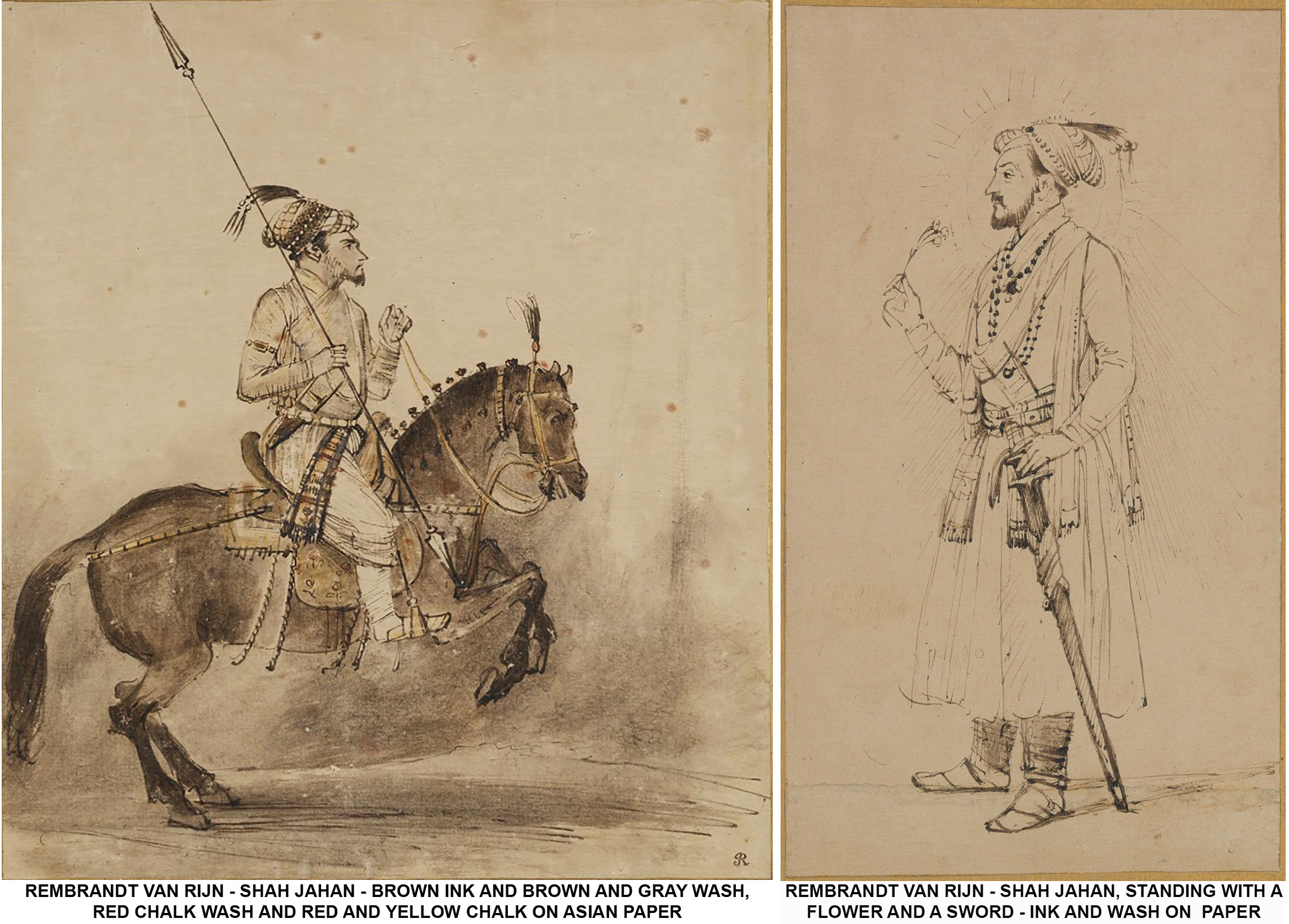
Nearly two centuries before the height of British colonial rule in India, Rembrandt became fascinated by Mughal court imagery that reached Amsterdam through Dutch trading networks. Around the 1650s, he produced a remarkable series of drawings based upon Mughal miniature paintings, approximately twenty-three of which survive today.
These drawings depict emperors, courtiers, nobles, horsemen, and religious figures dressed in elaborate Indian costumes. Rather than merely copying the miniatures, Rembrandt translated them into his own artistic language. He introduced volume, modelling, and psychological depth while preserving the elegance and dignity of the original Mughal compositions.
His studies of figures believed to represent Shah Jahan and other Mughal nobles remain among the earliest artistic dialogues between Europe and India. Remarkably, Rembrandt never travelled beyond the Dutch Republic. His India was encountered entirely through objects, images, and commerce.
Yet these drawings demonstrate an unusual degree of respect and curiosity. Unlike many later Orientalist images, they were not intended as fantasies but as serious artistic engagements with another visual tradition.
Empire, History Painting and the British Imagination
By the late eighteenth century, India had become central to British political and cultural life. The expansion of the East India Company and the defeat of Tipu Sultan in 1799 generated enormous public interest throughout Britain.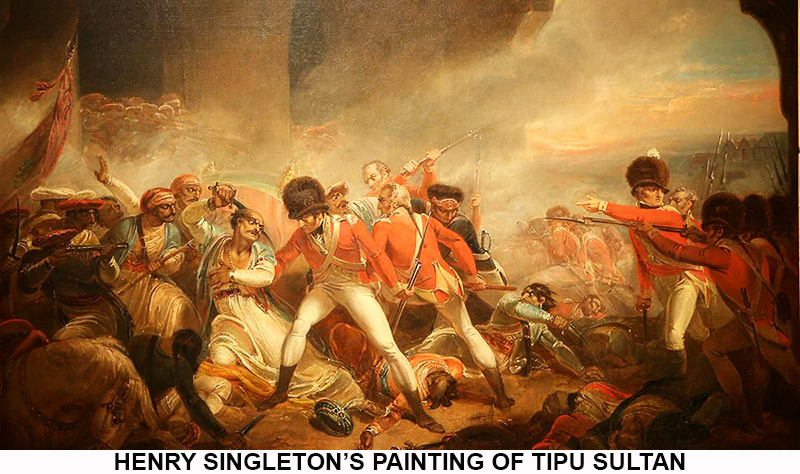
Artists responded quickly.
Among them was Henry Singleton (1766–1839), whose paintings depicting the Anglo-Mysore Wars, the Siege of Seringapatam, and the surrender of Tipu Sultan’s sons became iconic images of British imperial triumph.
These works were often produced entirely from military reports, written descriptions, official documents, and studio reconstructions. They were less records of India than carefully crafted visual narratives designed for British audiences. Yet they profoundly shaped European perceptions of Indian history.
The India represented in these paintings was frequently dramatic, exotic, and politically charged—an India viewed through the lens of empire.
The Printed Word and the Discovery of Indian Mythology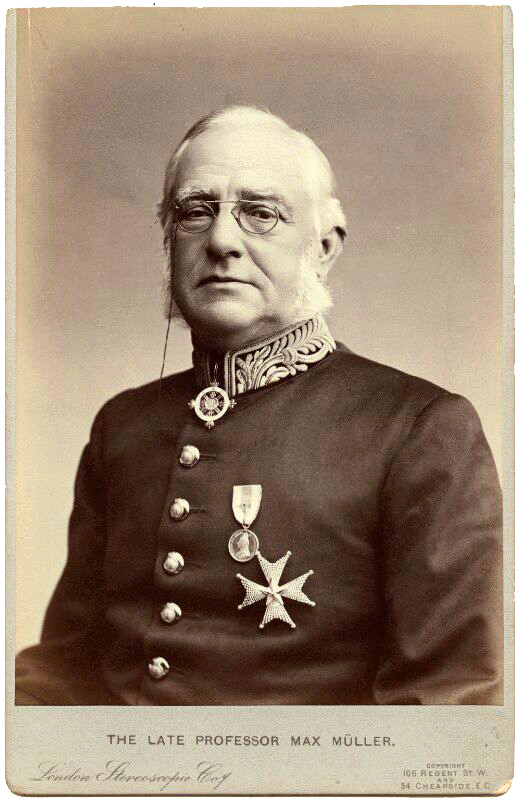 The nineteenth century witnessed an unprecedented European fascination with Indian literature, mythology, and religion.
Translations of the Mahabharata, Ramayana, Panchatantra, Hitopadesha, and numerous regional folk tales introduced European readers to a vast world of Indian narratives.
An equally important role was played by scholars such as Friedrich Max Müller (1823–1900), whose translations and studies of Sanskrit texts brought Hindu philosophy and Vedic literature to a global readership. In a letter written to his wife on 09 December 1867, Müller wrote: "The translation of the Veda will hereafter tell to a great extent on the fate of India, and on the growth of millions of souls in that country. It is the root of their religion, and to show them what the root is, I feel sure, is the only way of uprooting all that has sprung from it during the last 3,000 years ... one ought to be up and doing what may be God's work."
For many artists, these books became their first encounter with India.
The India they imagined emerged not from direct observation but from stories, legends, poetry, and scholarship. Ancient heroes, celestial beings, sages, kings, and mythical creatures entered the European imagination through printed pages long before they appeared on canvas.
Warwick Goble and the Golden Age of Illustration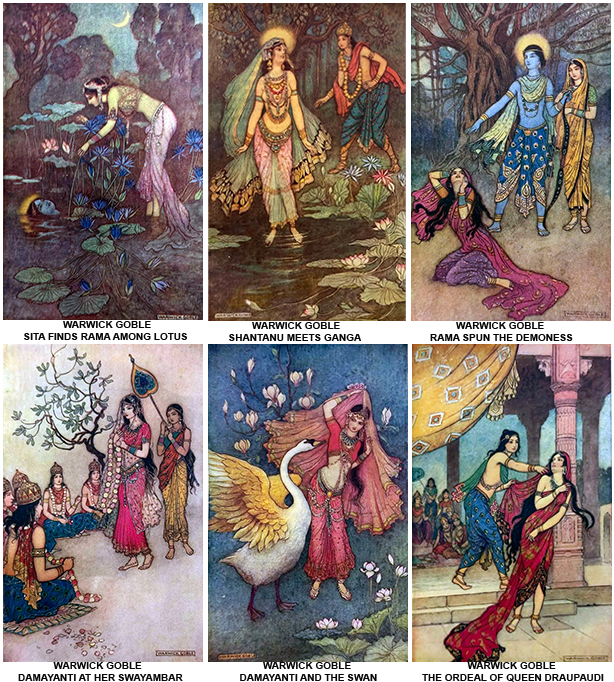
Among the finest interpreters of Indian stories was Warwick Goble (1862–1943).
Goble never visited India, yet his illustrations for books such as Folk-Tales of Bengal (1912) and Indian Myth and Legend (1913) created some of the most enduring visual representations of Indian narratives for Western audiences.
Drawing upon photographs, museum collections, textiles, architecture, and published descriptions, Goble constructed luminous watercolours populated by princes, dancers, gods, sages, and mythical creatures.
His illustrations occupy a fascinating space between scholarship and fantasy. They are neither authentically Indian nor entirely European. Instead, they represent an imaginative synthesis of research, decorative design, and literary interpretation.
For many Western readers, Goble’s images became their first visual introduction to Indian mythology.
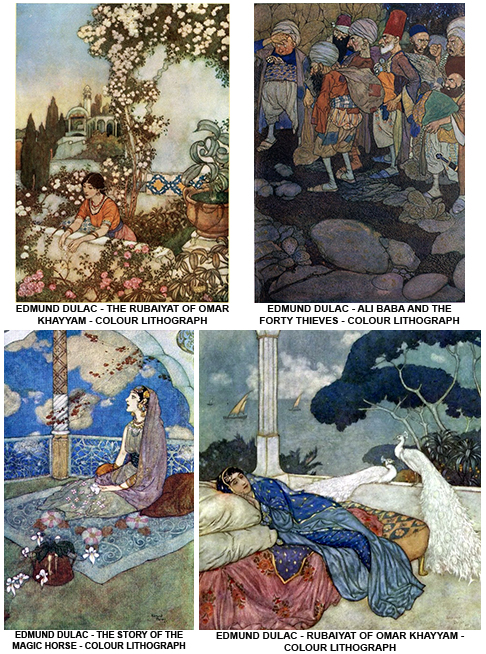 Edmund Dulac and the Romantic East
Another major figure was Edmund Dulac (1882–1953), one of the most celebrated illustrators of the early twentieth century.
Although best known for illustrating The Arabian Nights and Persian-inspired tales, Dulac frequently incorporated motifs derived from Indian miniature painting, Mughal costume, architecture, and decorative arts.
His richly coloured compositions reflected a broader European fascination with Asia as a realm of beauty, mystery, and spirituality.
Like Goble, Dulac relied upon museum collections, books, and imported artefacts rather than personal experience. Yet his images helped define how generations of readers visualised the East.
His work demonstrates how India often entered European art indirectly, becoming part of a wider imaginative geography that blended India, Persia, Arabia, and Central Asia into a single romantic vision.
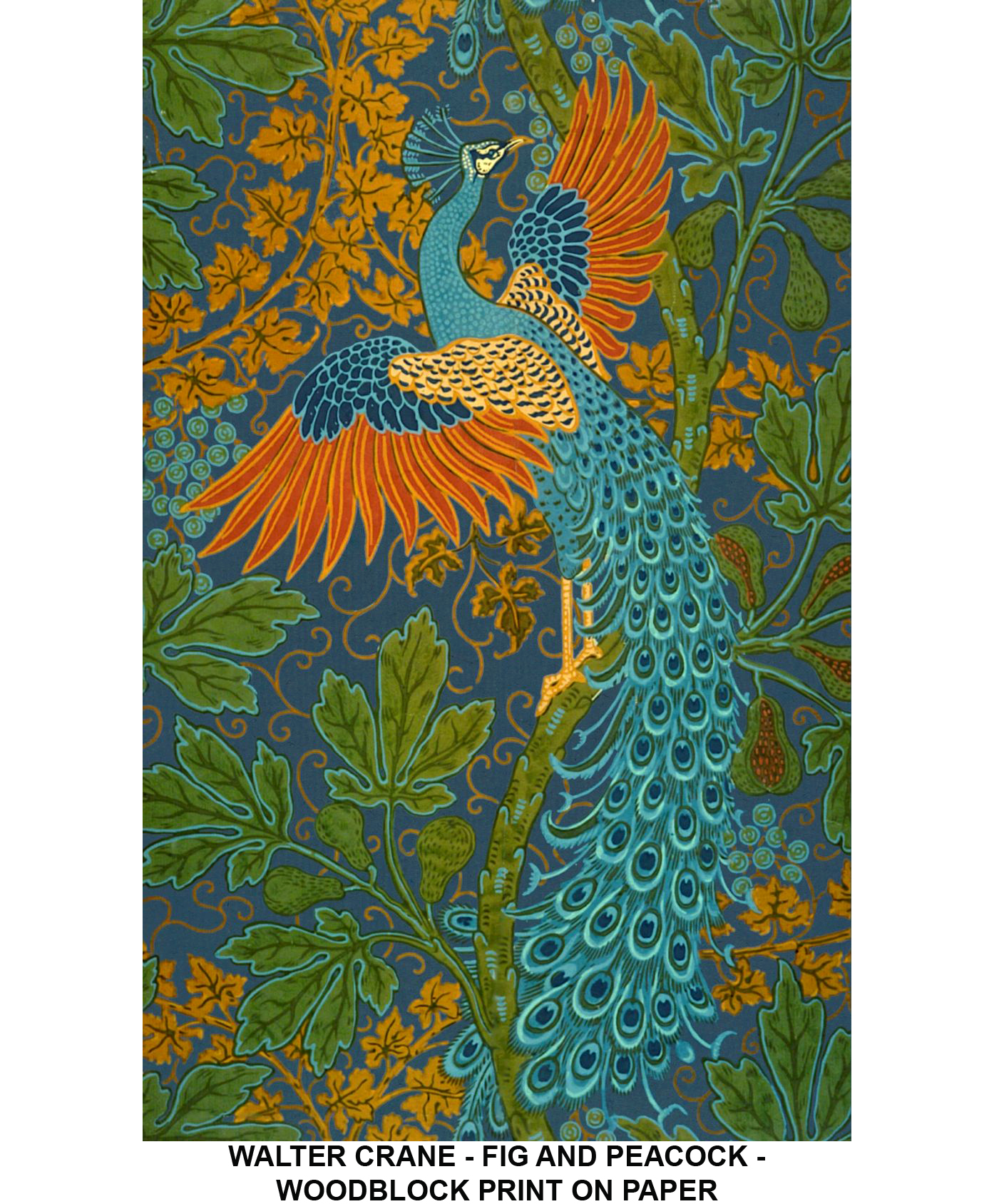 Walter Crane and the Decorative East
Walter Crane (1845–1915), one of the leading figures of the Arts and Crafts movement, also drew inspiration from Indian visual culture.
His engagement with India extended beyond narrative illustration. Through decorative design, textiles, book covers, and ornamental compositions, Crane helped integrate Indian motifs into European decorative arts.
Indian textiles, manuscripts, architectural ornament, and craft traditions had become increasingly visible in museums and international exhibitions. For Crane and many of his contemporaries, India represented both a source of aesthetic inspiration and an alternative to the mechanised industrial culture of Victorian Europe.
In this sense, India influenced not only images of itself but broader developments within modern European design.
India as a Spiritual Ideal
By the late nineteenth century, India was increasingly viewed not merely as a colony but as a source of spiritual wisdom.
The rise of Theosophy, growing interest in comparative religion, and the translation of Hindu and Buddhist texts encouraged many European intellectuals to see India as a repository of ancient knowledge.
Artists, writers, and designers began associating India with mysticism, transcendence, and philosophical insight. This image was often romanticised, yet it played a significant role in shaping modern perceptions of Indian culture.
For many Europeans, India became less a geographical location than a symbolic landscape representing spiritual alternatives to industrial modernity.
Museums as Windows to India
Many of these artists never needed to travel.
By the late nineteenth century, India had effectively arrived in Europe.
Museums displayed Indian sculpture, textiles, jewellery, manuscripts, arms, paintings, and architectural fragments. Colonial exhibitions recreated Indian streets, villages, and monuments. Photography circulated widely. Illustrated books multiplied rapidly.
London, Paris, Amsterdam, and Berlin offered unprecedented access to Indian visual material.
Yet the India encountered through museums was often filtered through colonial collecting practices and European expectations. What audiences saw was not India itself but a curated version assembled through imperial networks.
This inevitably shaped artistic responses.
Between Curiosity and Orientalism
The legacy of these artists remains complex.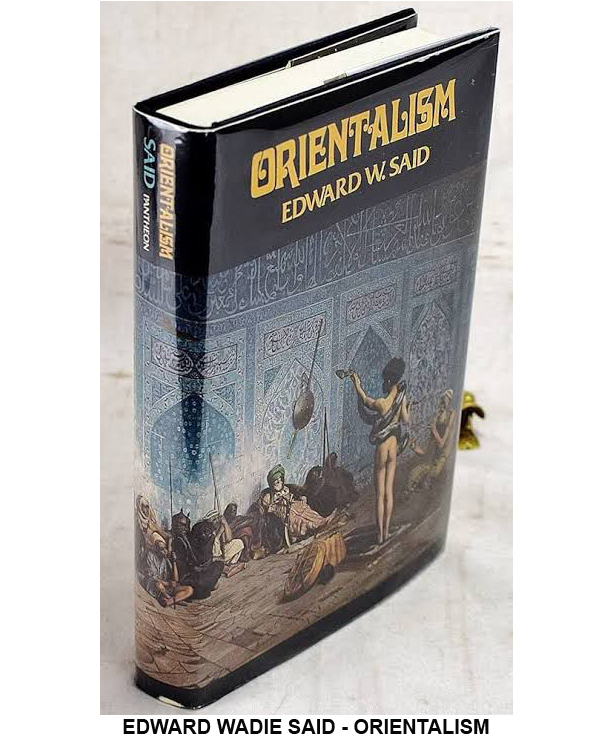
Some approached India with genuine curiosity and admiration. Others reinforced stereotypes and exotic fantasies. Many did both simultaneously.
Today scholars frequently discuss such works through the framework of Orientalism, a concept popularised by Edward Wadie Said (1935–2003). Orientalism examines how Western societies often represented Eastern cultures through lenses of power, exoticism, and projection.
Yet it would be simplistic to dismiss all such works as colonial fantasy.
Rembrandt engaged seriously with Mughal aesthetics. Goble devoted considerable effort to understanding Indian mythology. Dulac and Crane studied Asian visual traditions with great care. Many illustrators introduced Western audiences to Indian stories at a time when knowledge of South Asia remained limited.
Their works occupy a fascinating territory between observation and imagination, scholarship and invention.
The India That Existed in the Mind
Perhaps the most revealing aspect of these artists is that they were not painting India itself.
They were painting an idea of India.
That idea was assembled from books, objects, stories, museum collections, photographs, and cultural encounters. It was incomplete, romanticised, and sometimes inaccurate. Yet it was also immensely influential.
Long before cinema, television, or digital media, these images helped shape how generations of Europeans imagined India.
Today they remind us that art does more than record reality.
It also constructs it.
And sometimes the most revealing images of a place are created not by those who visited it, but by those who imagined it.
The story of these artists is therefore not simply a history of representation. It is a history of cultural transmission, artistic curiosity, and the remarkable ways in which images travel across continents. Their works remind us that art history is not only a story of places seen, but also of places imagined.
Selected Bibliography
Fetvacı, Emine. Rembrandt and Mughal India. Getty Research Journal.
Goble, Warwick. Folk-Tales of Bengal. London: Macmillan, 1912.
Goble, Warwick. Indian Myth and Legend. London: Macmillan, 1913.
MacKenzie, John M. Orientalism: History, Theory and the Arts. Manchester University Press, 1995.
Mitter, Partha. Much Maligned Monsters: A History of European Reactions to Indian Art. Oxford University Press, 1977.
Mitter, Partha. Art and Nationalism in Colonial India. Cambridge University Press, 1994.
Nochlin, Linda. “The Imaginary Orient.” Art in America, 1983.
Said, Edward Wadie. Orientalism. New York: Pantheon Books, 1978.
Schrader, Stephanie (ed.). Rembrandt and the Inspiration of India. Los Angeles: Getty Publications, 2018.
Tromans, Nicholas (ed.). The Lure of the East: British Orientalist Painting. Yale University Press, 2008.
_______________________________________________________________________________________________________________________________________________________________________
Research & Compiled by Aakriti Art Gallery team
Comments
Join the Discussion
Please login to post comments.
Login